In This Guide
- Why Deep Conditioning Matters
- Protein vs Moisture - Which Do You Need?
- Best Budget: Mielle Rosemary Mint Masque
- Best Premium: Amika Soulfood Mask
- Best Multi-Use: SheaMoisture Curl Smoothie
- Best for Damaged Hair: Olaplex No. 3+
- Best Curly + Damaged: Curlsmith Bond Rehab
- Best for Coily Hair: Mielle Pomegranate & Honey
- How to Deep Condition Properly
- How Often to Deep Condition by Curl Type
| Product | Best For | Price | |
|---|---|---|---|
| Mielle Rosemary Mint Hair Masque Best Budget | All curl types | ~$10 | Buy |
| Amika Soulfood Hair Mask Best Premium | Dry, thirsty curls | ~$28 | Buy |
| SheaMoisture Curl Enhancing Smoothie | 3A-3C, multi-use | ~$11 | Buy |
| Olaplex No. 3+ Hair Perfector | Damaged hair | ~$30 | Buy |
| Curlsmith Bond Curl Rehab Salve | Curly + damaged | ~$32 | Buy |
| Mielle Pomegranate & Honey Curl Smoothie | 3C-4C coily | ~$10 | Buy |
Why Deep Conditioning Matters for Curly Hair
Curly hair is structurally different from straight hair. The bends and twists of each curl strand make it harder for natural scalp oils to travel down the hair shaft - which means curls are almost always running a moisture deficit. Add in styling, diffusing, environmental exposure, and the occasional co-wash shortcut, and you've got hair that's chronically thirsty.
A regular rinse-out conditioner helps, but it's designed for surface-level smoothing in 2-5 minutes. A deep conditioner goes further. Its richer formula penetrates the cortex of the hair shaft, replenishing moisture (or protein) from the inside out. The result is measurably better elasticity, softer texture, reduced breakage, and curls that spring back instead of falling flat.
Deep conditioning isn't a luxury step - it's maintenance. Think of it the same way you think about oil changes for a car: skip it long enough and you'll notice the damage.
Signs you need to deep condition more often: hair that snaps instead of stretches when wet, excessive frizz that won't quit, dull or brittle ends, and curls that have lost their definition or bounce.
Protein vs Moisture - Which Do You Need?
Before reaching for a deep conditioner, it helps to know what your hair actually needs. Not all deep conditioning treatments are the same - they fall into two broad categories, and using the wrong one can make things worse.
Moisture deep conditioners focus on hydration. They're packed with humectants (like glycerin and aloe vera), emollients (shea butter, avocado oil), and water-binding agents. These are what most people should use weekly. Signs you need moisture:
- Hair feels dry and rough even after washing
- Curls are limp, frizzy, and undefined
- Hair stretches a lot before snapping (over-elasticity can mean too much protein)
- Hair feels mushy or gummy when wet
Protein treatments rebuild the hair's structural integrity using hydrolyzed proteins (keratin, silk, wheat). These are for hair that's been weakened by heat, bleach, or chemical processing. Signs you need protein:
- Hair snaps immediately with no stretch when wet
- Curls feel limp and won't hold their shape
- Excessive shedding or breakage
- Hair that feels "stringy" or over-soft
Most people need moisture far more often than protein. A good rule: use a moisture deep conditioner weekly, and reach for a protein treatment no more than once a month - then always follow up with moisture. Olaplex No. 3+ and Curlsmith Bond Rehab (below) are bond-repair treatments that sit somewhere between the two.
1. Mielle Rosemary Mint Hair Masque - Best Budget
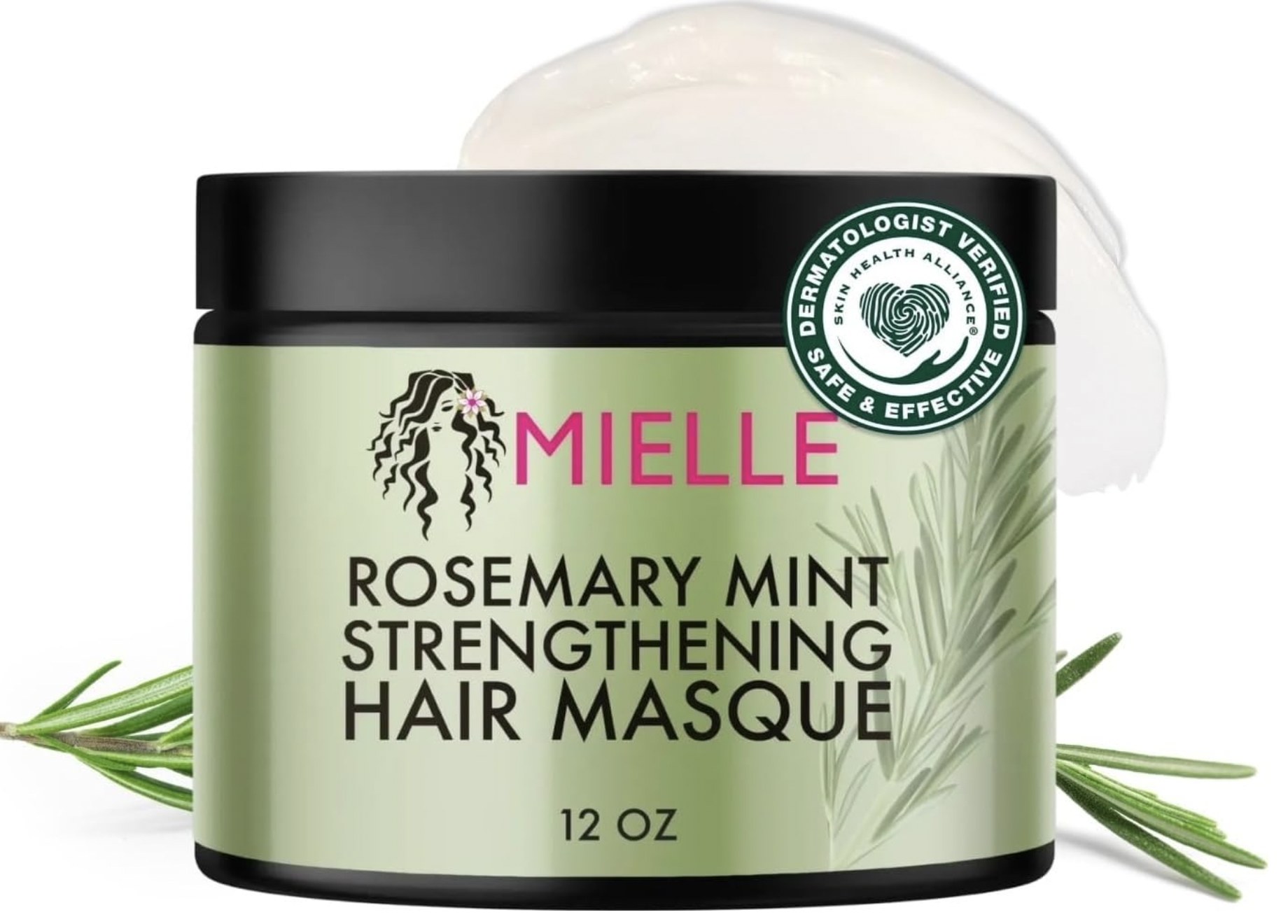
Mielle Rosemary Mint Hair Masque
Best for: All curl types • ~$10 for 8oz
Get It Here → See all Mielle picks →The Mielle Rosemary Mint Hair Masque is one of the best deep conditioners you can find at a drugstore price point. It's lightweight enough for wavy and fine curls but still delivers genuine moisture - something rare in the sub-$15 category.
The formula leans on biotin, rosemary, and mint to condition while also supporting scalp health. It rinses clean without leaving residue, and hair feels noticeably softer and easier to detangle after use.
Pros: Affordable, widely available (Target, Walmart, Amazon), lightweight texture suits fine and wavy hair, pleasant scent. Cons: Not rich enough for very thick or high-porosity 4C hair - you'd need to layer it under a heavier butter or oil for maximum effect.
2. Amika Soulfood Nourishing Hair Mask - Best Premium
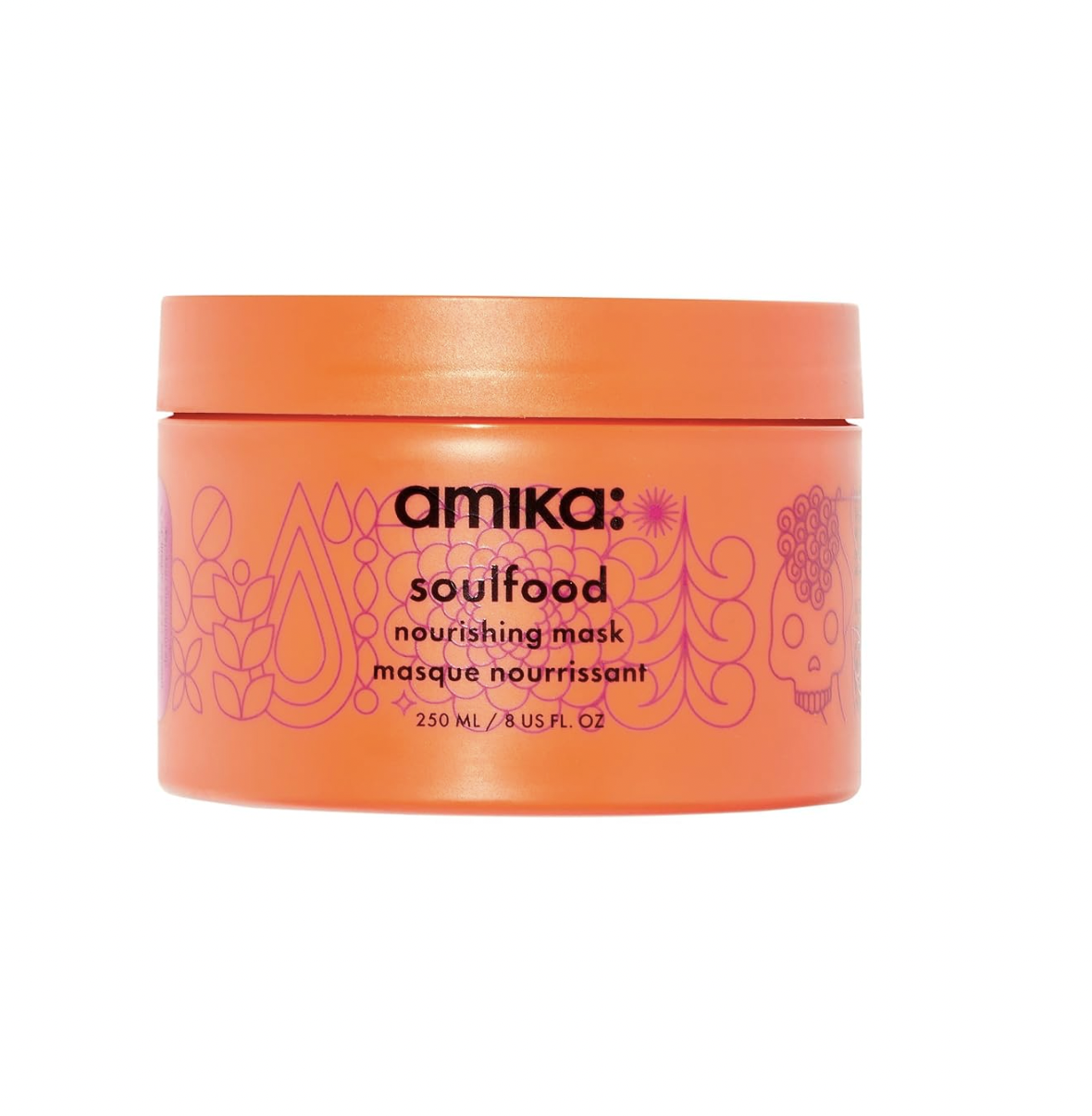
Amika Soulfood Nourishing Hair Mask
Best for: Dry, thirsty curls of all types • ~$28 for 8.5oz
Get It Here → See all Amika picks →If you're going to spend money on one deep conditioner, the Amika Soulfood Mask is where to spend it. The formula is built around sea buckthorn berry - one of the most nutrient-dense plant oils available - alongside a blend of fatty acids, vitamins, and deeply hydrating agents.
The texture is rich without feeling heavy. It applies easily, distributes well through thick curls, and rinses out completely. After one use you'll notice improved softness, shine, and a reduction in mid-shaft breakage. It works across all curl types, which makes it an excellent household staple if you've got multiple curl textures in the house.
Pros: Exceptional ingredient quality, works for all curl types, noticeable results even on very dry hair, rinsing doesn't strip the moisture back out. Cons: Higher price point. Smaller bottle relative to cost - but a little goes further than you'd expect with a good application technique.
3. SheaMoisture Coconut & Hibiscus Curl Enhancing Smoothie - Best Multi-Use
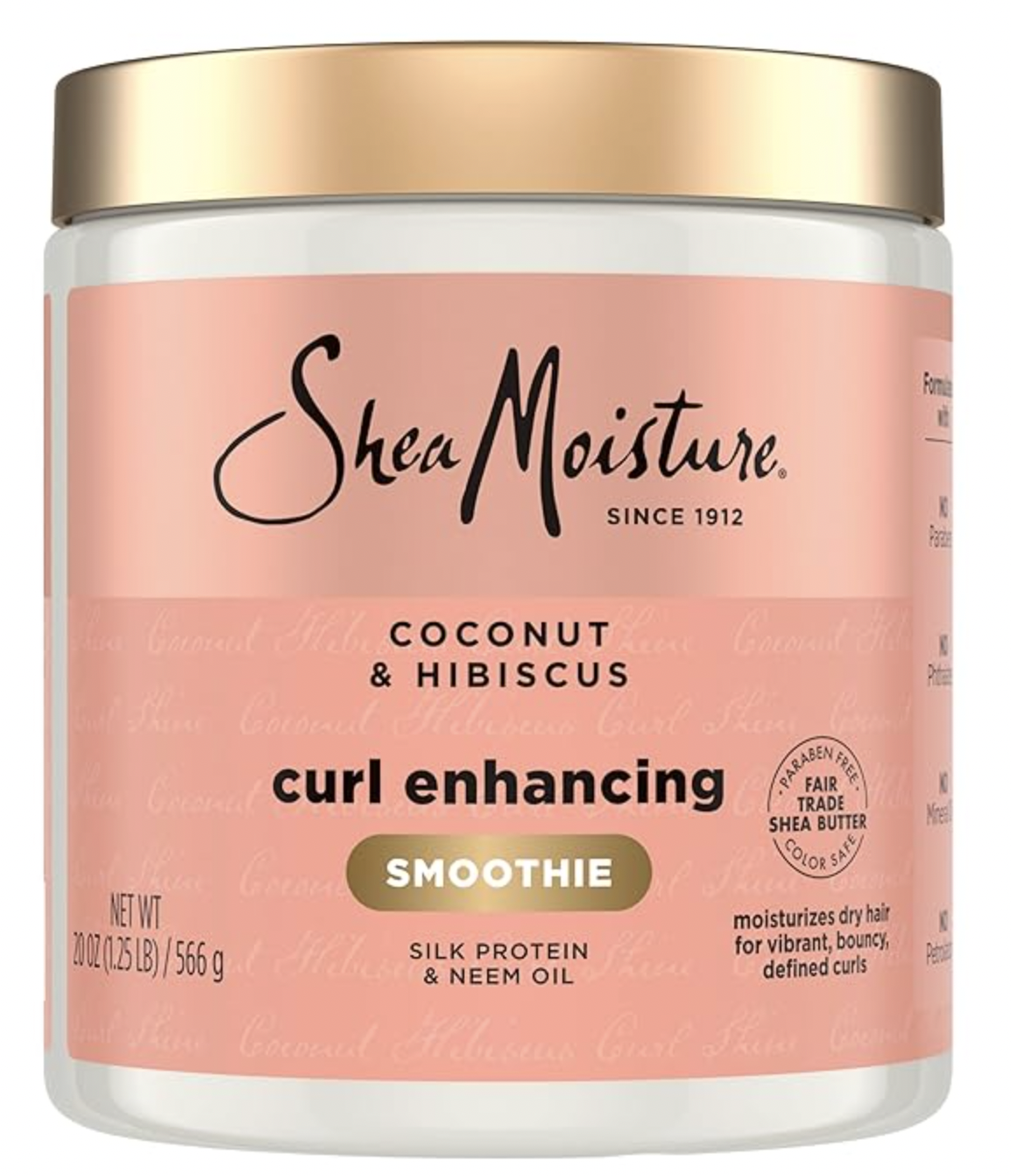
SheaMoisture Coconut & Hibiscus Curl Enhancing Smoothie
Best for: Type 3A-3C • ~$11 for 12oz
Get It Here → Read our full review →Technically marketed as a styler, the SheaMoisture Curl Enhancing Smoothie doubles remarkably well as a deep conditioner - especially for type 3A-3C curls. Apply a generous amount to clean, damp hair, cover with a plastic cap, wait 20-30 minutes, then rinse and style as usual. The results are genuinely impressive: soft, defined curls with excellent moisture retention.
The multi-use angle is what earns it a spot here. If you want to simplify your routine and your budget, this can handle deep conditioning duty and then go straight to work as a leave-in or styler on the same wash day.
Pros: Double duty as styler and deep conditioner, great value, widely available, excellent for type 3 curls. Cons: Too heavy for wavy 2A-2B hair. Not a protein treatment - purely moisture-focused. Not ideal for 4C hair that needs maximum moisture penetration from a dedicated masque formula.
4. Olaplex No. 3 Plus Hair Perfector - Best for Damaged Hair
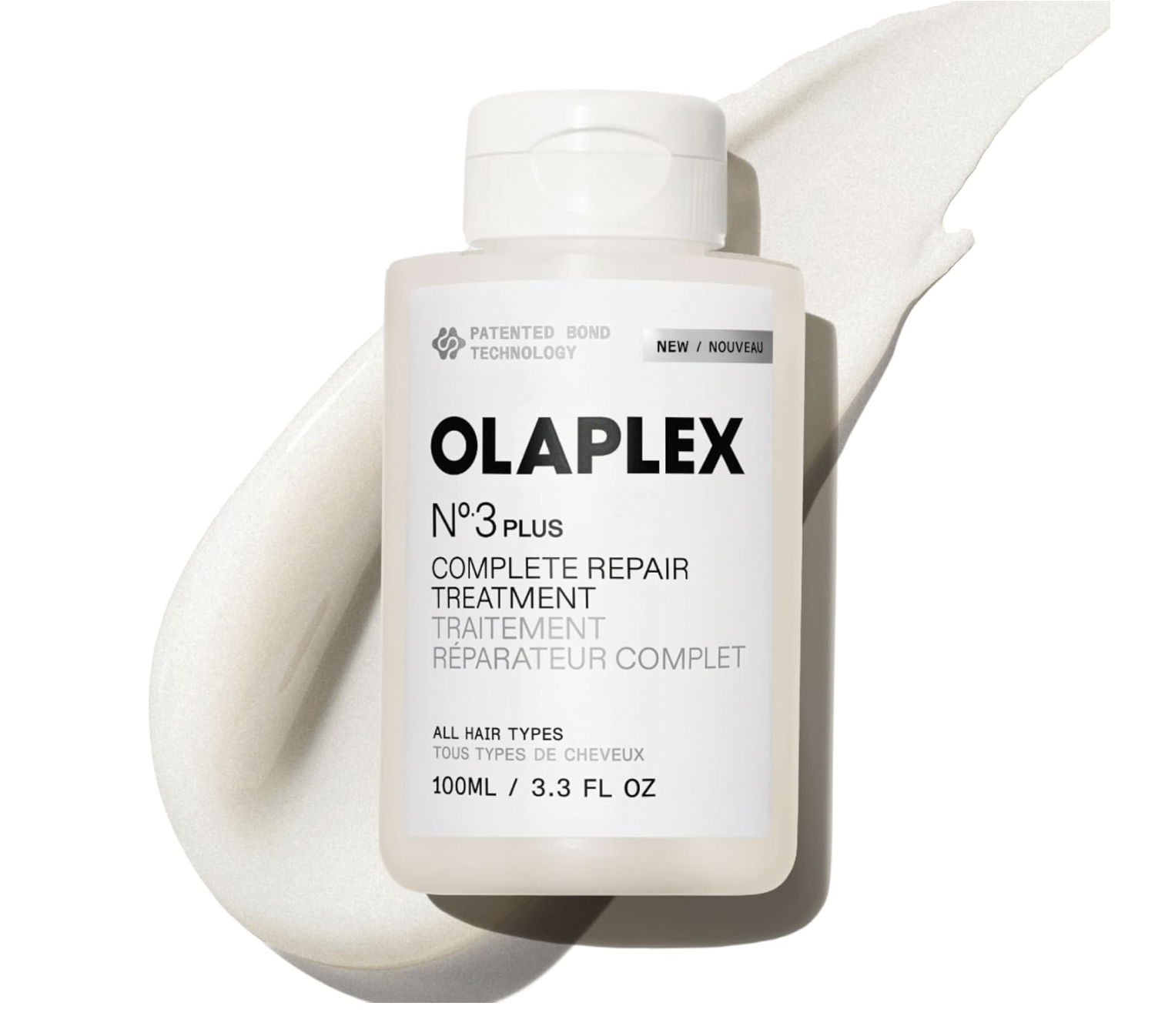
Olaplex No. 3+ Hair Perfector
Best for: All curl types with heat or color damage • ~$30 for 3.3oz
Get It Here → Read our full review →Olaplex No. 3+ is not a traditional deep conditioner - it's a bond repair treatment. That distinction matters. While moisture masks hydrate the outer layers of your hair, Olaplex works at the molecular level, reconnecting broken disulfide bonds inside the hair shaft that are damaged by bleach, color, heat, and chemical processing.
For curly hair that's been through the wringer - repeated heat straightening, highlights, relaxers, or years of harsh shampoos - this is the treatment that actually addresses the structural damage rather than masking it. Apply to dry or slightly damp hair before shampooing, leave on for at least 10 minutes (up to 90 for heavily damaged hair), then shampoo and condition as normal.
Pros: Addresses root-cause damage rather than just coating the surface, works on all curl types, measurable improvement in elasticity and strength after consistent use. Cons: Expensive per ounce. Not a substitute for moisture - always follow up with a hydrating conditioner. Results build over time rather than being immediate. The safety questions around Olaplex are worth reading before you start.
5. Curlsmith Bond Curl Rehab Salve - Best for Curly + Damaged
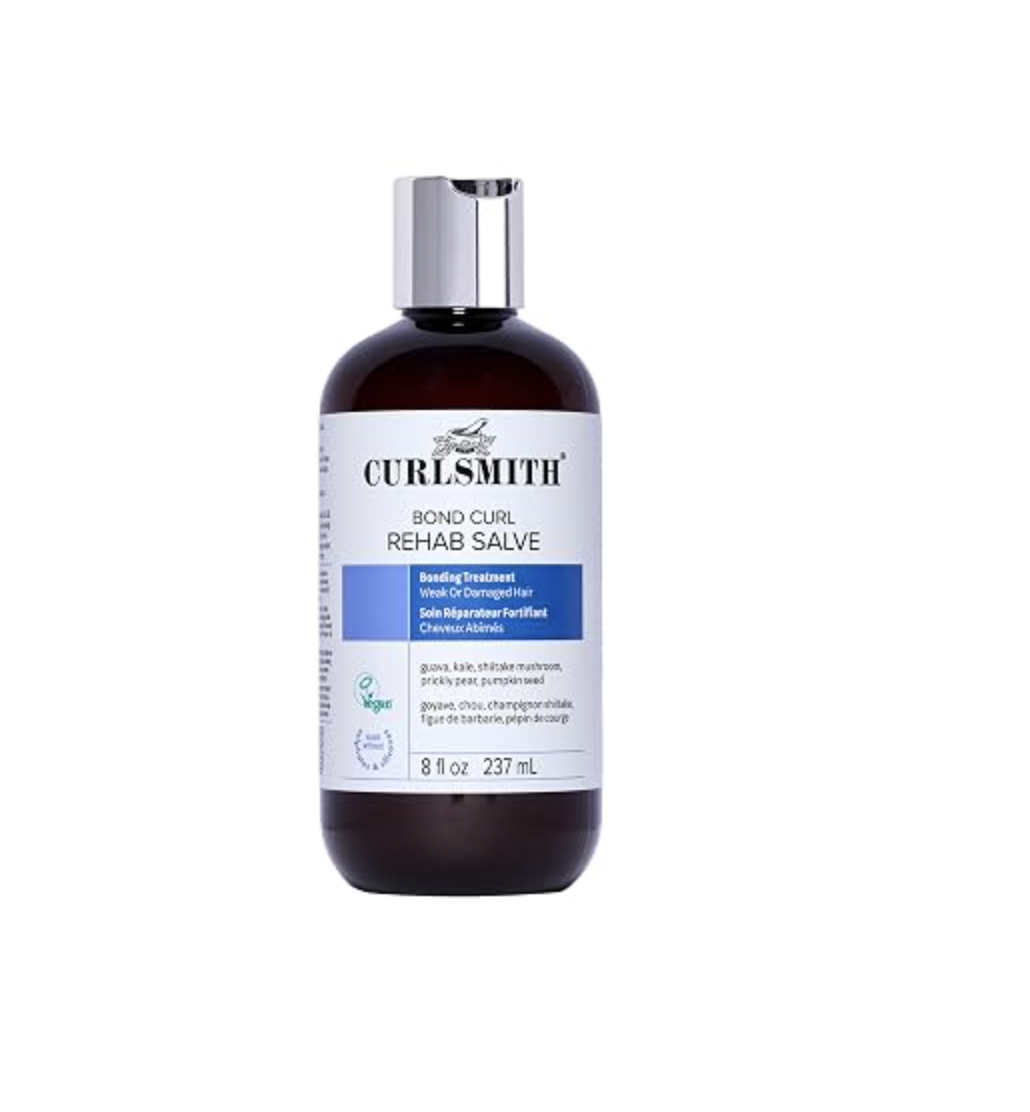
Curlsmith Bond Curl Rehab Salve
Best for: Type 2C-4C with damage • ~$32 for 8oz
Get It Here → See Curlsmith comparisons →The Curlsmith Bond Curl Rehab Salve combines bond repair with deep moisture - making it the best option if your curls are both damaged and dry, which is an extremely common combination. Where Olaplex focuses purely on bond chemistry, this salve adds significant hydration on top of structural repair, so you're not left with strong-but-dry hair after each use.
It's a thicker, richer formula that works particularly well on type 3-4 curls. Apply generously to clean, damp hair, cover with a heat cap for 20-30 minutes, then rinse thoroughly. The difference in curl pattern definition and strand integrity after consistent use is significant - especially for hair that's been heat-styled frequently.
Pros: Dual-action repair and moisture, richer formula suited to thicker curl types, genuinely noticeable results on damaged curls. Cons: Higher price point. Too heavy for fine or wavy hair. Requires thorough rinsing to avoid buildup.
6. Mielle Pomegranate & Honey Curl Smoothie - Best for 3C-4C Coily Hair
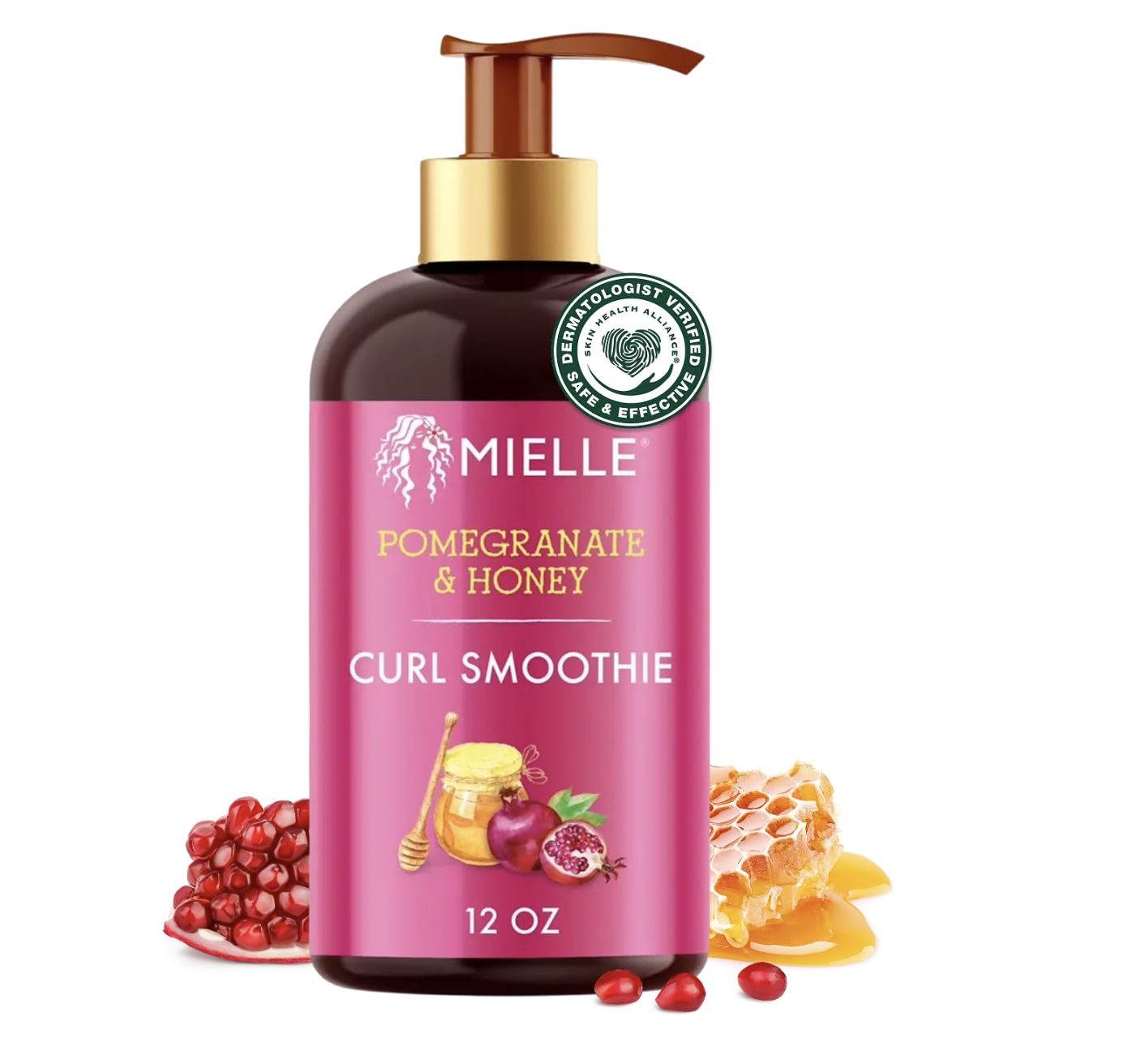
Mielle Pomegranate & Honey Curl Smoothie
Best for: Type 3C-4C • ~$10 for 8oz
Get It Here → See all Mielle picks →For tight curl patterns that need heavy moisture and slip, the Mielle Pomegranate & Honey Curl Smoothie is one of the best values on the market. It's a richer, denser formula than the Rosemary Mint Masque - formulated specifically for the moisture demands of type 3C through 4C hair.
Honey and pomegranate extract work as humectants, drawing moisture into the strand and holding it there. The formula also provides excellent slip for detangling, which makes wash day significantly less painful for tightly coiled textures. Use it as a weekly deep conditioner with a heat cap for best results.
Pros: Excellent budget pick for coily hair, great slip for detangling, honey provides long-lasting moisture retention. Cons: Too heavy for wavy or fine hair. Works best with heat - results at room temperature are less impressive than under a heat cap.
How to Deep Condition Properly
The technique matters almost as much as the product. Here's the process that gets the best results:
- Start with clean, damp hair. Deep conditioner penetrates better on freshly shampooed hair. If you co-wash, that works too - just make sure product buildup isn't blocking the cuticle. Gently squeeze out excess water so hair is damp, not dripping.
- Apply generously from mid-shaft to ends. These are the oldest, driest parts of your hair. The roots rarely need as much attention. Distribute with your fingers or a wide-tooth comb, working in sections for thorough coverage.
- Cover with a plastic cap. Body heat under a cap helps open the cuticle and allows deeper penetration - even without additional heat tools. This is a simple upgrade that makes a real difference.
- Add heat if possible. A heat cap, hooded dryer, or sitting under a warm towel for 15-20 minutes gives noticeably better results. Heat opens the cuticle and drives the conditioner further into the cortex.
- Leave on for 15-30 minutes. Most deep conditioners reach their maximum effectiveness around the 20-30 minute mark. Going longer (up to an hour or overnight with certain products) can be beneficial for very dry or damaged hair, but check the product instructions.
- Rinse with cool water. A cool or lukewarm rinse seals the cuticle back down, locking in what you just put in. A hot rinse will undo some of your work.
- Style as usual. Apply leave-in conditioner while hair is still wet, then your styler of choice. Sealed moisture from the deep conditioning step gives your styler better hold and definition to work with.
How Often to Deep Condition by Curl Type
There's no universal answer - curl type, porosity, and how much your hair is exposed to heat and styling all matter. Use this as a starting point:
- Type 2A-2B (loose waves): Every 2 weeks. Lightweight moisture masque. Avoid heavy butters or protein overload.
- Type 2C-3A: Weekly. Moisture masque, occasionally a protein treatment if hair feels limp or snaps.
- Type 3B-3C: Weekly. Moisture-focused masque is the priority. Add a bond treatment monthly if hair is heat-styled or color-treated.
- Type 4A-4B: Weekly, ideally with heat. Rich moisture masques like the Mielle Pomegranate & Honey or Amika Soulfood.
- Type 4C: Weekly - some prefer twice weekly. Heaviest moisture formulas, heat cap strongly recommended. Consider the LOC or LCO method after rinsing to seal moisture in.
- Color-treated or heat-damaged: Deep condition every wash day until moisture and elasticity improve. Add a bond repair treatment (Olaplex No. 3+ or Curlsmith Rehab Salve) once a month.
The stretch test: Take a single wet strand and stretch it gently. Healthy hair stretches 20-30% before snapping back. If it snaps immediately with no stretch, you need protein. If it stretches way out and doesn't spring back (or doesn't snap at all), you need moisture - not more protein.
The Bottom Line
For most curly hair types on a budget, start with the Mielle Rosemary Mint Hair Masque - it's genuinely effective, affordable, and available everywhere. If your curls are thirsty and you want to invest in something premium, the Amika Soulfood Mask delivers noticeable results across all curl types. And if damage is the issue, Olaplex No. 3+ or Curlsmith Bond Rehab Salve address the structural problem that moisture alone can't fix.
Whatever you pick, deep conditioning consistently - once a week with heat - will do more for your curl health than switching products every few months. Stick with it and you'll see the difference within 4-6 weeks.
Building a full routine? Check out our complete beginner's curly hair routine to see where deep conditioning fits with the rest of your wash day steps.
Frequently Asked Questions
How often should you deep condition curly hair?
Most curly and coily hair types benefit from deep conditioning once a week. Wavy hair (type 2) can go every 1-2 weeks. If your hair is color-treated, heat-damaged, or high porosity, deep condition after every wash until moisture levels improve. Protein treatments should be used less frequently - no more than once a month for most people.
What is the difference between a deep conditioner and a regular conditioner?
Regular rinse-out conditioners are designed to smooth the cuticle quickly - usually 2-5 minutes. Deep conditioners have a richer, more concentrated formula and need 15-30 minutes (or more with heat) to penetrate the hair shaft and replenish moisture or protein from the inside. They make a measurable difference in elasticity, softness, and breakage reduction.
Should I use heat when deep conditioning?
Heat helps deep conditioner penetrate the hair shaft more effectively by lifting the cuticle slightly. A heat cap or sitting under a hooded dryer for 15-20 minutes gives noticeably better results than letting it sit at room temperature. That said, even without heat, leaving a deep conditioner on for 30 minutes still works well - especially if you cover hair with a plastic cap to trap body heat.